
Travel disruptions can test anyone’s patience, but mastering composure during delays and cancellations transforms chaos into opportunity. This comprehensive guide empowers you with practical strategies to navigate unexpected travel challenges calmly and confidently.

Whether you’re a frequent flyer or occasional traveler, understanding how to respond gracefully to transportation hiccups protects your mental well-being and often leads to better outcomes. The ability to stay calm isn’t just about temperament—it’s a learnable skill that combines preparation, perspective, and proven techniques that work in real-world situations.
🧠 Understanding Why We Lose Our Cool During Travel Disruptions
Before developing calmness strategies, it’s essential to recognize what triggers stress during delays and cancellations. Our emotional responses aren’t random—they’re rooted in psychological patterns that affect nearly everyone facing unexpected disruptions.
Loss of control sits at the heart of travel-related anxiety. When flights get cancelled or trains run hours behind schedule, we suddenly lose agency over our carefully planned itineraries. This perceived helplessness activates our stress response, flooding our bodies with cortisol and adrenaline.
The financial implications compound this stress. Many travelers worry about lost hotel reservations, missed connections, or additional expenses they hadn’t budgeted for. This economic anxiety transforms a simple delay into a perceived crisis, especially when traveling on a tight budget.
Social pressure also plays a significant role. Missing important meetings, family events, or once-in-a-lifetime occasions creates guilt and frustration. We imagine disappointed faces and professional consequences, amplifying our emotional response beyond the actual situation.
✈️ The Pre-Travel Foundation: Building Resilience Before Departure
Staying calm during disruptions starts long before you reach the airport or station. Strategic preparation creates a psychological buffer that protects you when things go sideways.
Creating Your Disruption Contingency Plan
Successful travelers don’t just plan their ideal journey—they prepare for likely alternatives. Research backup routes, identify hotels near your departure point, and compile a list of airline customer service numbers before leaving home. This preparation doesn’t invite problems; it neutralizes their power over your emotional state.
Build time buffers into your itinerary whenever possible. If you’re attending a wedding or crucial business meeting, arrive a day early. This single decision eliminates the most stressful element of travel delays—the fear of missing something irreplaceable.
Purchase comprehensive travel insurance that covers delays and cancellations. Knowing you’re financially protected removes a major anxiety trigger, allowing you to focus on solutions rather than worrying about costs.
Mental Preparation Techniques That Work
Visualize handling delays calmly before your trip. Spend five minutes imagining yourself receiving cancellation news, taking a deep breath, and methodically working through solutions. This mental rehearsal creates neural pathways that activate automatically during actual disruptions.
Adjust your expectations about travel itself. Modern transportation systems are remarkably reliable, but they’re not perfect. Accepting that delays happen—even to you—reduces the shock factor when they occur.
📱 Essential Tools for Managing Delays Efficiently
Technology transforms how we handle travel disruptions, providing real-time information and rebooking options that weren’t available to previous generations. Leveraging these tools strategically keeps you informed and empowered.
Download your airline or transportation provider’s official app before traveling. These applications often show delay information before gate agents announce it, giving you valuable extra minutes to strategize. Many apps also enable self-service rebooking, letting you secure alternative flights without waiting in customer service lines.
Flight tracking applications provide detailed information about aircraft locations, weather patterns affecting your route, and historical performance data for specific flights. This transparency reduces anxiety by replacing uncertainty with concrete information.
Airport lounge apps help you find comfortable waiting spaces with amenities during extended delays. Even without traditional lounge memberships, some applications offer day passes or credit card benefits you might not know you have.
😌 Immediate Calm-Down Techniques When Disruptions Strike
Despite perfect preparation, the initial moment of learning about a significant delay or cancellation triggers an emotional response. What you do in these first few minutes determines whether you’ll handle the situation gracefully or spiral into frustration.
The Five-Breath Reset Method
Before checking your phone, calling anyone, or approaching a service desk, take five slow, deliberate breaths. Inhale for four counts, hold for four counts, exhale for six counts. This physiological intervention activates your parasympathetic nervous system, literally changing your body’s stress response.
This technique works because it’s impossible to maintain peak anxiety while breathing slowly and deeply. You’re giving your prefrontal cortex—the rational, problem-solving part of your brain—a chance to come back online before you make decisions or interact with others.
Perspective Shifting Questions
Ask yourself: “Will this matter in five years?” This simple question immediately puts travel delays in proper context. Unless you’re missing a transplant surgery or wedding ceremony, the honest answer is probably no.
Follow up with: “What opportunity does this situation create?” Maybe you’ll discover a fantastic airport restaurant, have an interesting conversation with a fellow stranded traveler, or catch up on that book you’ve been meaning to read. Reframing delays as unexpected free time rather than stolen time changes everything.
🗣️ Communicating Effectively with Service Personnel
How you interact with airline agents, hotel staff, and customer service representatives directly impacts the outcomes you’ll receive. Calm, strategic communication opens doors that frustration slams shut.
Remember that gate agents and service representatives didn’t cause your delay—they’re dealing with dozens or hundreds of frustrated customers while trying to solve complex logistical puzzles. Approaching them with empathy and respect makes you memorable in the best possible way.
Use this proven communication framework: acknowledge the difficulty of their job, clearly state your situation, ask what options they can offer, and express genuine appreciation for their help. This approach positions you as a collaborative problem-solver rather than another angry customer making demands.
Avoid these communication mistakes that undermine your goals: raising your voice, making threats, comparing your situation to others’, citing your elite status aggressively, or insisting something is “unacceptable.” These tactics rarely produce better outcomes and guarantee you’ll feel worse regardless of results.
When to Escalate and How to Do It Gracefully
Sometimes requesting a supervisor is necessary, but timing and approach matter immensely. If the first representative genuinely cannot help due to system limitations or policy restrictions, politely asking to speak with a supervisor is reasonable. Frame it as seeking additional options rather than complaining about their service.
Phone and social media channels sometimes offer different solutions than in-person interactions. If you’re not making progress at the gate, simultaneously call the customer service line or send a direct message through the company’s social media accounts while waiting.
🏨 Making the Most of Extended Delays
When delays stretch beyond a few hours, shifting from “waiting mode” into “alternative experience mode” preserves your sanity and sometimes creates unexpectedly positive memories.
Assess your situation realistically. If your flight won’t leave until tomorrow morning, accepting this reality and planning accordingly beats camping miserably at the gate for 14 hours. Ask about hotel vouchers, but be prepared to book your own accommodation if necessary—your comfort and rest matter more than principle.
Research what’s actually accessible from your delay location. Many airports now offer interesting amenities: museums, yoga rooms, sleeping pods, shower facilities, and quality restaurants. Some airports are near city centers, making a brief exploration feasible during long layovers.
Use delay time productively or pleasurably—these aren’t mutually exclusive. Catch up on work emails if that reduces your stress, or finally watch that series everyone’s been recommending. Download entertainment options before traveling, since airport WiFi often disappoints during peak congestion times.
💪 Building Long-Term Travel Resilience
Frequent travelers who consistently maintain composure during disruptions have developed specific mindsets and habits worth emulating. These patterns become particularly valuable if you travel regularly for work or pleasure.
The Stoic Traveler Philosophy
Ancient Stoic philosophy offers surprisingly relevant wisdom for modern travelers. The core principle—distinguish between what you can control and what you can’t—applies perfectly to travel disruptions. You cannot control weather, mechanical issues, or air traffic systems. You can control your response, backup planning, and attitude.
Practicing this distinction reduces wasted emotional energy. Instead of ruminating about why the delay happened or who’s to blame, you channel that energy into productive problem-solving or acceptance.
Developing a Personal Delay Ritual
Create a consistent response routine you implement whenever disruptions occur. This might include: taking those five deep breaths, texting affected parties with updates, assessing rebooking options, finding a comfortable spot away from crowds, and ordering your favorite comfort beverage.
Having a ritual transforms chaos into a familiar process. Your brain recognizes the pattern and settles more quickly because you’re following a script you’ve practiced before.
👨👩👧👦 Managing Delays When Traveling with Others
Group dynamics complicate delay management significantly. Children, elderly relatives, or anxious travel companions require additional emotional resources precisely when yours are already strained.
Designate one person as the “information and rebooking lead” while others focus on comfort and morale. This division of labor prevents everyone from simultaneously stressing about the same problems while neglecting practical needs like food, bathroom breaks, or entertainment.
When traveling with children, maintain routines as much as possible during delays. Stick to regular meal and nap times if feasible. Pack substantial entertainment options in carry-ons—delays are when those extra snacks, games, and tablet downloads prove invaluable.
For couples or friends traveling together, establish a “frustration venting window.” Agree that each person gets 10 minutes to express frustration without solutions or silver linings. After that window closes, shift into problem-solving mode together. This structure validates emotions while preventing endless complaint spirals.
🎯 Turning Disruptions into Unexpected Benefits
The most resilient travelers go beyond merely tolerating delays—they’ve learned to extract genuine value from these unexpected pauses in their journeys.
Document your delay experience creatively. Write about it, photograph interesting aspects of your waiting environment, or record voice notes about your thoughts and observations. This creative engagement transforms passive suffering into active experience, changing your relationship with the event.
Connect with fellow delayed passengers. Some of the most interesting conversations happen in airport gates during long delays when everyone’s guard is down and shared inconvenience creates instant camaraderie. You might make a valuable professional contact, hear a fascinating life story, or simply enjoy human connection during otherwise isolating travel.
Many travelers report that their delay stories become their best travel stories over time. The adventure you lived through, the creative problem-solving you employed, or the unexpected kindness you encountered often prove more memorable than smooth, uneventful journeys.
📊 Knowing Your Rights and When to Claim Compensation
Understanding passenger rights transforms powerless frustration into informed advocacy. Different regions and transportation types offer varying protections and compensation for delays and cancellations.
European Union regulations (EC 261/2004) provide robust passenger protections including compensation ranging from €250 to €600 for significant delays and cancellations, plus mandatory meals, refreshments, and accommodation for qualifying situations. These rights apply to flights departing from EU airports or arriving at EU airports on EU carriers.
United States regulations offer fewer automatic compensations but do require carriers to compensate passengers for involuntary denied boarding and provide care during certain extended tarmac delays. Contract of carriage terms vary significantly between airlines, making it valuable to understand your specific carrier’s policies.
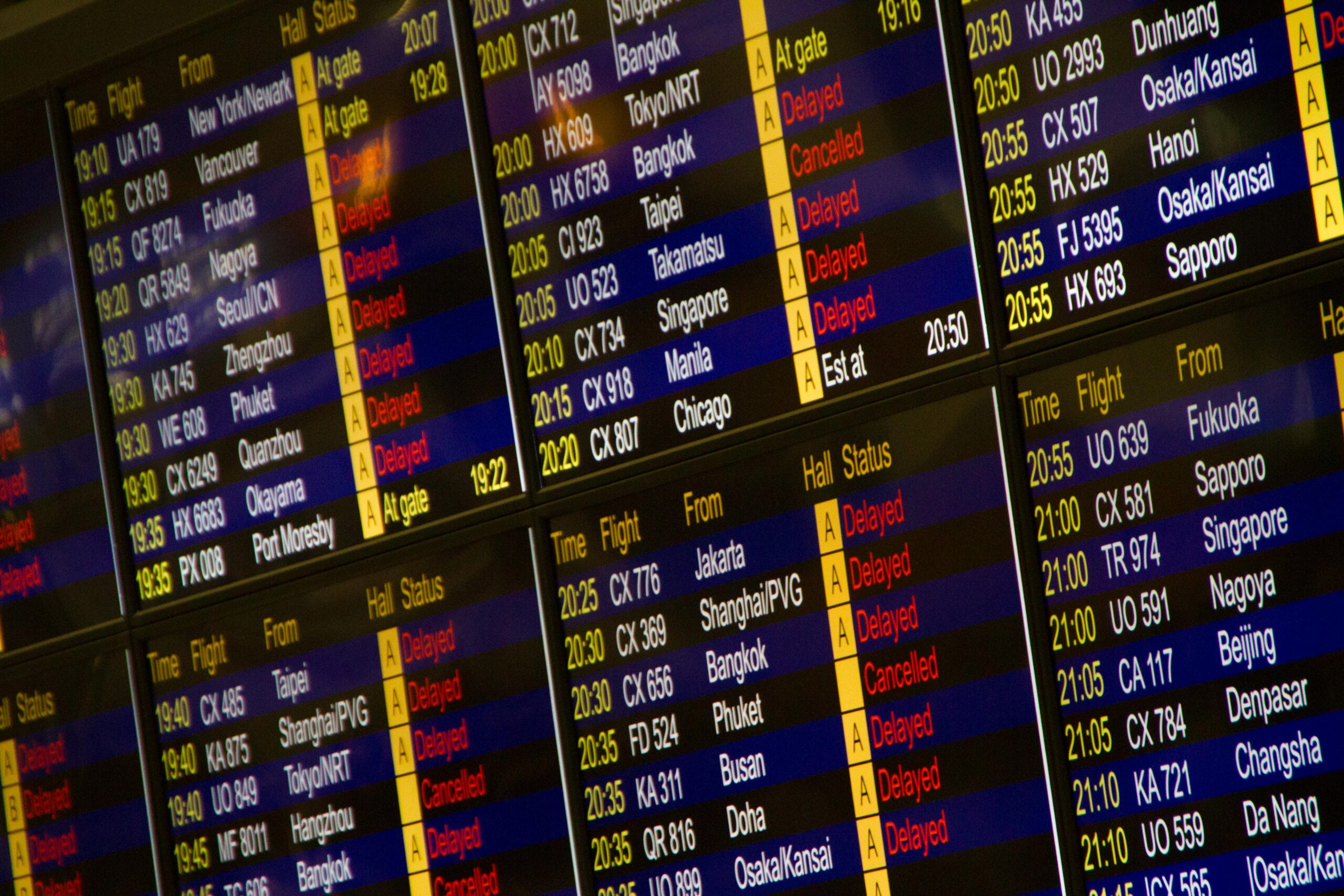
Document everything during significant disruptions: take photos of departure boards showing delays, save all communications from the carrier, keep receipts for expenses incurred due to the disruption, and note the names of staff members you interact with. This documentation proves essential if you later file compensation claims.
🌟 The Ultimate Mindset Shift: Embracing Uncertainty
The deepest level of travel calm comes from fundamentally accepting uncertainty as an inherent element of the journey rather than an aberration to avoid. Travel inherently involves moving through complex systems involving weather, machinery, and human coordination—each introducing possibilities for variance.
Travelers who suffer most during delays are often those who believed they had eliminated uncertainty through careful planning. When reality contradicts this belief, the cognitive dissonance creates intense frustration. Conversely, those who plan thoroughly while acknowledging that surprises remain possible experience disruptions as less jarring.
This mindset doesn’t mean becoming fatalistic or abandoning preparation. Rather, it means holding your plans lightly—making them with care while remaining psychologically flexible when circumstances require adjustment.
Consider delays as information rather than obstacles. A cancelled flight tells you something about current conditions, providing you with data to make your next decision. This subtle reframing shifts you from victim to strategic decision-maker.
🔄 Recovery Strategies After Disruption-Heavy Travel
Even with perfect calm-maintaining techniques, travel disruptions are depleting. Managing the aftermath thoughtfully prevents accumulated travel stress from affecting your well-being long-term.
Give yourself permission to rest after particularly challenging travel experiences. Resist the temptation to immediately jump into work or activities upon finally arriving at your destination. Even an hour of genuine rest helps your nervous system reset.
Process the experience constructively. Identify what worked well in your response and what you’d handle differently next time. This reflection transforms the disruption into a learning experience that builds genuine resilience for future challenges.
Update your travel strategies based on lessons learned. Maybe you discovered that a particular backup app was invaluable, or you realized you need to pack different comfort items in your carry-on. These concrete improvements give the disruption lasting value beyond the immediate frustration.
✨ Your Confident Departure: Prepared for Whatever Comes
Mastering calm during travel delays and cancellations isn’t about never feeling frustrated—it’s about developing tools, perspectives, and habits that help you navigate disruptions gracefully. Each challenging travel experience you handle well builds confidence for the next one, creating a positive cycle of increasing resilience.
The strategies outlined here work because they address both the practical and emotional dimensions of travel disruptions. Preparation reduces uncertainty, breathing techniques calm your physiology, perspective questions reframe your experience, and effective communication improves outcomes. Together, these elements transform you from a passenger at the mercy of circumstance into a capable traveler who handles whatever comes with grace and confidence.
Your next trip might proceed flawlessly, or it might test these new skills immediately. Either way, you’re now equipped with a comprehensive framework for maintaining your composure and finding solutions when travel doesn’t go according to plan. That preparedness itself provides a foundation of confidence that makes every journey more enjoyable, regardless of what surprises emerge along the way.